
Figure 4.1. Diet Chart for Infants (6–8 Months)
First complementary feeding stage alongside continued breast milk
At 6 completed months (180 days), an infant's energy and nutrient needs exceed what breast milk alone can provide. Complementary feeding must start smoothly with soft, well-mashed food while breast milk continues on demand.
🕒 Daily Feeding Schedule & Exact Meal Breakdown
Soft mashed porridge of rice and redgram dal enriched with spinach and ghee.
Steamed & smooth mashed fresh seasonal fruit.
Energy-dense grain-legume-amaranth mash with ghee.
Breast Milk Foundation (420 Kcal/day)
Continue breast milk feedings on demand throughout the day and night (before meals, between meals, and at night). The remaining 420 Kcal comes naturally from breast milk.
Essential Clinical Guidelines for 6–8 Month Infants
- Texture: Thick, smooth porridge/puree that stays on the spoon without running off.
- Frequency: 2 to 3 complementary food meals per day plus frequent breast milk.
- NO Added Salt or Sugar: Do not add salt, sugar, or jaggery. Infant kidneys cannot handle added sodium, and sugar causes tooth decay.
- NO Cow's Milk or Honey: Avoid animal milk as primary drink and avoid honey (botulism risk) before 12 months.
- Hygiene: Always wash hands with soap before preparing infant food and feeding. Use clean, boiled water.
Diet Chart for Infants (9–12 Months)
Transitioning to lumpy mashes, finger foods & family meal flavors
By 9 to 12 months, infants develop pincer grasp and chewing ability. Complementary foods should provide ~300 Kcal/day, while breast milk provides ~380 Kcal/day (Total energy ~680 Kcal/day).
Coarse ragi or wheat daliya cooked in water/breastmilk with 1 tsp ghee (20g grain).
Soft ripe fruit slices or coarse fruit mash (50g) encouraging self-feeding.
Rice (15g), Yellow Moong Dal (10g), Carrot/Ghia (25g), Ghee (5g). Lightly mashed with spoon.
Fresh homemade paneer mash (20g) or fully boiled egg yolk + breast milk feed.
Diet Chart for Toddlers (1–3 Years)
Family foods, growth spurt support & active play energy
Toddlers require adequate protein (~12.5g/day) and calcium (500mg/day) for bone mineralization and rapid brain development. Serve 3 main meals + 2 healthy snacks.
| Meal Time | Food Selection | Quantities | Key Nutrients |
|---|---|---|---|
| Breakfast (8:00 AM) | Stuffed Paneer Paratha / Moong Dal Cheela + Milk | 1 small paratha / cheela + 150ml whole milk | Protein, Calcium, Fat |
| Mid Morning (11:00 AM) | Seasonal Fruit (Mango, Banana, Apple) + Roasted Makhana | 1 medium fruit + 10g makhana | Dietary Fiber, Vitamin C |
| Lunch (1:30 PM) | Roti/Rice + Tuvar Dal + Mixed Veggie (Ghia/Pumpkin) + Curd | 1 Roti or 1/2 cup rice + 1/2 cup dal + 50g curd | Complex carbs, Protein, Gut Probiotics |
| Evening (5:00 PM) | Vegetable Soup / Boiled Chana Mash | 1 small bowl (100ml) | Micronutrients, Iron |
| Dinner (8:00 PM) | Soft Khichdi or Roti soaked in Dal + Ghee | 1 bowl khichdi with 1 tsp ghee | Easy digest carbs & healthy fats |
Diet Chart for Children (4–8 Years)
School age balance, cognitive focus & immunity boosting
School children require sustained glucose release for cognitive concentration in school and physical endurance for sports. Avoid packaged ultra-processed snacks and sugary juices.
1 Glass Milk (200ml) + 4 Soaked Almonds + Vegetable Poha / Oats Dosa / 2 Boiled Eggs with Whole Wheat Toast.
2 Multigrain Rotis or Brown Rice + 1 Bowl Chole/Rajma/Fish Curry + Green Leafy Vegetable + Fresh Cucumber Salad.
Fresh Fruit Chaat (Guava, Pomegranate, Orange) + Roasted Chana or Homemade Paneer Cubes (30g).
1-2 Rotis + Dal Tadka + Seasonal Sabzi + Warm Milk with Pinch of Turmeric before bed.
Diet Chart for Adolescents (9–18 Years)
Pubertal growth spurt, peak bone mass & iron fortification
Adolescence is the second fastest growth phase in human life. Girls need high dietary iron (28-30mg/day) to prevent pubertal anemia, while both boys and girls need 1000mg calcium and 45-55g protein daily for skeletal height optimization.
Adolescent Daily Macro Targets
- Protein: 45g – 55g (Eggs, Paneer, Chicken, Sprouted Moong, Rajma, Soy, Sattu)
- Calcium: 1000 mg (500ml Milk/Curd/Butter Milk + Sesame seeds + Green greens)
- Iron & Folate: Spinach, Beetroot, Jaggery (sparingly), Dates, Lean Meats, Vitamin C rich fruits to boost absorption.
- Zero Fast Food Rule: Limit bakery maida, trans-fats, and sugary carbonated drinks which induce insulin resistance and premature PCOD.
Diet Chart for Adults (19–59 Years) — Metabolic Focus
Endocrinologist-curated plan for Diabetes, Thyroid & Weight Management
In adult years, preventing and managing metabolic conditions like Type 2 Diabetes, Prediabetes, Hypothyroidism, PCOD/PCOS, and Dyslipidemia requires strict adherence to Low Glycemic Index (GI) principles and the Indian Plate model.
🥗 The "My Plate for the Day" Rule (Dr. Ajay Shukla's Protocol)
50% Plate: Non-starchy vegetables & fresh salad (Cucumber, Tomatoes, Spinach, Bottle gourd).
25% Plate: Lean Protein (Dal, Sprouts, Paneer, Tofu, Boiled Eggs, Fish, Chicken).
25% Plate: Complex Carbs & Whole Grains (Coarse Millets, Jowar, Bajra, Brown Rice, Missi Roti).
1 Glass warm water with soaked Chia seeds / Methi dana water + 5 Soaked Almonds + 2 Walnuts.
2 Besan / Moong Dal Cheelas with Paneer stuffing OR 3 Egg White Omelette with spinach & veggies. Unsweetened Tea/Coffee.
1 Large Bowl Green Salad + 2 Missi / Jowar Rotis + 1 Bowl Sprouted Dal + 1 Bowl Sabzi + 100g Curd.
1 Cup Green Tea / Roasted Makhana / Roasted Chana (30g) / Pumpkin seeds.
Diet Chart for Senior Adults (60+ Years)
Preserving muscle mass (Anti-sarcopenia), joint & bone health
Seniors experience reduced basal metabolic rate, lower gastric acid secretion, and risk of muscle loss (sarcopenia). Nutrient-dense, easy-to-chew, high-protein foods are critical.
- High Digestible Protein: Soft moong dal khichdi, double-toned milk, paneer bhurji, steamed fish, or egg whites.
- Calcium & Vitamin D: 1200mg calcium/day supported by adequate sunlight exposure for osteoporosis prevention.
- Hydration: At least 2 to 2.5 liters of liquids daily (warm water, buttermilk, clear vegetable soup) to prevent constipation and electrolyte imbalance.
Diet Chart for Pregnancy & Lactation
Maternal nutrition, fetal development & breast milk quality
Pregnant women require an additional +350 Kcal/day in 2nd/3rd trimester, while lactating mothers require +600 Kcal/day (0-6 months). Folic acid, iron, calcium, and DHA are vital.
Folate rich foods (Spinach, lentils, citrus fruits), Iron + Vitamin C pairing, 1.2g protein per kg body weight, gestational diabetes screening.
Galactagogues (Jeera water, Methi seeds, Oats, Garlic), 3 to 4 liters fluid intake daily, wholesome multigrain meals with ghee.
Explore Specialized Endocrine Diet Guides
In-depth patient education articles written by Dr. Ajay Shukla for specific hormonal and metabolic conditions.
📱 ICMR-NIN NutriPlan 2020 App
Interactive Indian RDA calculator & meal plan generator based on ICMR-NIN 2020 guidelines & Indian Food Composition Tables (IFCT 2017).
Launch NutriPlan App →🥦 Fruits & Vegetables Clinical Guide (Bilingual)
WHO, ICMR-NIN & ADA evidence-based bilingual guide on fruit & vegetable intake in health, obesity, pregnancy, children and diabetes (English + हिन्दी).
Read Fruits & Veg Guide →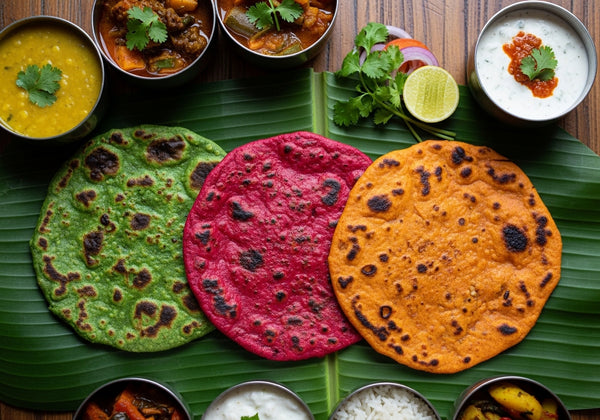
🥩 Indian Protein Guide
Complete guide on meeting daily protein goals with vegetarian and non-vegetarian Indian food options for diabetes and weight management.
Read Full Protein Guide →🍱 Diabetes Indian Plate
How to construct a balanced Indian thali to control post-meal blood sugar spikes without giving up traditional home food.
Read Diabetes Plate Guide →📊 Glycemic Index Masterclass
Understand Low vs High GI foods, glycemic load, and how to swap simple carbs for complex grains in Indian cooking.
Read GI Guide →🫓 Gestational Diabetes Roti Guide
Best flour combinations (Atta) for pregnant women with gestational diabetes to keep maternal blood sugar under strict control.
Read GDM Roti Guide →⚖️ PCOD Weight Loss Guide
Scientific diet strategy to overcome insulin resistance, reduce androgen levels, and lose weight with PCOD/PCOS.
Read PCOD Guide →🍿 Diabetes Snack Exchange List
Healthy, crisp, low-carb evening snacks for diabetic patients to prevent hypoglycemic episodes and curb hunger pangs.
Read Snack List →Frequently Asked Questions (FAQ)
When should complementary feeding start for an infant?
Complementary feeding should begin exactly at 6 completed months (180 days). Breast milk continues to provide essential nutrients (approx 420 Kcal/day), while complementary foods provide the remaining energy (230 Kcal/day) making a total of 650 Kcal/day.
Why is added salt, sugar, and honey avoided for babies under 12 months?
Infants' kidneys are immature and cannot process added sodium (salt). Added sugar contributes to early tooth decay and preference for hyper-sweet foods. Honey poses a risk of infant botulism before 1 year of age.
What is the recommended daily energy requirement for infants aged 6–8 months?
The total energy requirement for an infant aged 6–8 months is 650 Kcal/day. This consists of 230 Kcal/day from suggested complementary foods and 420 Kcal/day from breast milk.
How does diet influence metabolic and endocrine health in adults?
A low glycemic index (GI), protein-adequate diet rich in fiber helps maintain stable insulin levels, prevents central adiposity, and manages conditions like Type 2 Diabetes, Thyroid dysfunction, and PCOD/PCOS.